Ever stared in frustration at your Whirlpool dishwasher’s blinking lights, wondering what mysterious message it’s trying to communicate? Those cryptic error codes for Whirlpool dishwasher aren’t meant to confuse you—they’re actually your appliance’s cry for help.
Most homeowners panic when strange symbols appear, but understanding these whirlpool dishwasher error codes can save you time, money, and unnecessary stress.
Think of these codes like a diagnostic system that pinpoints exactly what’s going wrong. From water fill issues to motor malfunctions, each code is a specific signal telling you where to focus your troubleshooting efforts. Instead of feeling overwhelmed, you’ll soon be speaking your dishwasher’s language.
Understanding Your Whirlpool Dishwasher’s Communication System
Modern dishwashers are like cars, showing their health through error codes. Whirlpool dishwashers use these codes to tell you what’s wrong. It’s like checking your car’s dashboard.
Knowing how to read Whirlpool dishwasher error codes can save you money and time. Not all Whirlpool dishwashers show error codes the same way. So, it’s key to understand their system for fixing problems.
How Error Codes Work in Modern Dishwashers
Error codes are like a built-in tool to find problems in your appliance. They follow a pattern like F#E#, where:
- F represents the first part of the error code
- # indicates a specific number related to the problem area
- E represents the second part of the error code
- Another # specifies the exact malfunction
Reading Blinking Light Patterns on Non-Digital Models
For non-digital Whirlpool dishwashers, error codes are shown through blinking lights. The “clean” light blinks in patterns to show problems.
| Blink Pattern | Interpreted Code | Potential Issue |
|---|---|---|
| 7 blinks, pause, 1 blink | F7E1 | Water inlet valve problem |
| 3 blinks, pause, 2 blinks | F3E2 | Temperature sensor error |
When figuring out Whirlpool dishwasher error codes, watch the light patterns closely. Each pattern tells you about your appliance’s state. It helps you find problems early.
Common Whirlpool Dishwasher Error Codes and What They Mean
Figuring out Whirlpool dishwasher error codes can be like solving a puzzle. It’s key to know how to get these codes for effective troubleshooting. A simple reset can fix many minor problems.
Understanding error codes is the first step in fixing your dishwasher. Whirlpool created these codes to help you find specific issues. They act as a communication tool from your dishwasher to you.
- Water supply problems
- Heating element issues
- Door latch malfunctions
- Control panel errors
- Motor and pump communication problems
A quick reset can often fix minor electronic issues. Just turn off your dishwasher at the circuit breaker for 5-10 minutes, then turn it back on. This simple step can sometimes clear error codes without needing more help.
Knowing what these error codes mean helps you decide if you can fix it yourself or need a pro. Each code tells you which part or system might be broken. This makes fixing your dishwasher more focused and quick.
While these tips work for most Whirlpool dishwashers, always check your model’s manual. It’s the best guide for understanding error codes for your specific dishwasher.
Water Fill and Drain Error Codes
Whirlpool dishwashers use error codes to tell us about problems. Water issues are common. Knowing these codes can save you money and time.
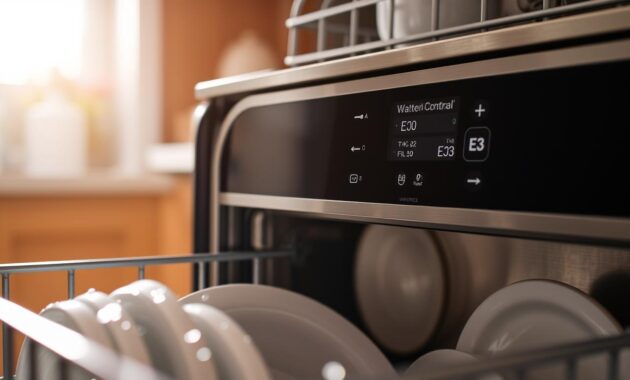
Troubleshooting F6E1 Water Fill Issues
If your dishwasher won’t fill, the F6E1 error code is a clue. It might mean a few things:
- Stuck overfill float mechanism
- Blocked water supply line
- Kinked water hoses
- Closed water valve
First, check the overfill float in the lower right corner. It’s a 3-inch circular disc. Make sure it moves easily without breaking the stem.
Fixing F8E1 Slow Drain or No Drain Problems
The f8e1 error code means there’s a problem with draining. Here’s how to fix it:
- Check garbage disposal knockout plug
- Inspect drain hose for blockages
- Examine drain pump impeller
- Clean dishwasher filter thoroughly
| Error Code | Possible Cause | Recommended Action |
|---|---|---|
| F8E1 | Drainage Blockage | Clean Filter and Check Hoses |
| F6E3 | Excessive Suds | Use Appropriate Detergent |
Understanding the F6E3 SUDS Alarm
The F6E3 SUDS alarm means too much soap or not enough water. Wrong detergent can cause this. Stick to dishwasher-specific detergents and avoid too many suds.
Heating Element and Temperature Errors
When your Whirlpool dishwasher has heating and temperature issues, it shows specific error codes. These whirlpool error f2e2 signals help you figure out and fix problems before needing a pro.
- F7E1: Open Heating Element
- F7E2: Heating Element Stuck On
- F3E1: Temperature Sensor Malfunction
- F6E6: Water Temperature Problems
An F7E1 code means the heating element is not working right. It’s not getting electricity. Use a multimeter to check if it’s working. A good element should have 10-50 ohms of resistance. If it’s over 100 ohms, it needs to be replaced.
The F7E2 error shows the heating element won’t turn off. This usually means a problem with the control board’s relay switch. Often, this needs a pro to fix or replace the board.
Errors like F3E1 and F3E2 can be from bad thermistor or OWI sensors. These sensors check water temperature and clarity. It’s important to check the sensor’s wiring for any issues.
F6E6 errors mean the water coming in is too cold. Make sure your water heater is set between 110-120°F. Cold water can really hurt your dishwasher’s performance and cleaning power.
Door Latch and Control Panel Malfunctions
Dishwasher error codes can be really frustrating. They often stop your Whirlpool dishwasher from working right. Learning how to reset and fix these issues can save you a lot of time and money.
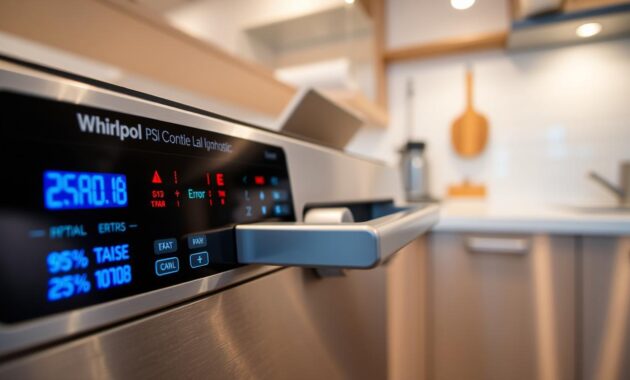
When your dishwasher shows weird error codes, it’s trying to tell you something. I’ll explain some common problems with the control panel and door latch that you might need to fix.
Resolving F5E1 Door Switch Failures
The F5E1 error code usually means a door switch issue. Modern Whirlpool dishwashers need the door to close within 4 seconds after you press Start. If you see this error, try these steps:
- Check the door seal for any obstructions
- Ensure the door closes completely
- Verify no debris prevents proper latching
Addressing F1E2 Internal Memory Problems
An F1E2 error means there’s a problem with the control board’s memory. While a pro might be needed, you can try a simple reset. Just unplug the dishwasher for 5-10 minutes to clear the memory.
If the issue keeps happening, it could be a bigger problem with the control board. Always be careful and get a certified tech if you’re not sure about fixing it yourself.
Motor and Pump Communication Errors
When your dishwasher doesn’t clean dishes well, motor and pump issues might be the problem. These problems stop water from moving right, leaving dishes dirty. It’s really frustrating during cleaning time.
Now, let’s look at some important error codes that might be causing trouble:
- F4E1: This code shows a problem with the main control and circulation pump talking to each other
- F9E1: This error means there’s a problem figuring out the diverter disc’s position
- FAE1: This suggests there might be a problem with the dispenser
To fix F4E1, first check the electrical connections. Look for any damage or loose wires. If the wash motor impeller is stuck, you might need to replace the whole sump/motor unit.
For F9E1 errors, check the diverter disc closely. This small part is key for water to go to the right spray arms. A leak in the diverter motor seal can really mess up cleaning.
Dispenser errors like FAE1 often come from jammed doors or soap buildup. Keeping your dishwasher clean can help avoid these problems.
If your dishwasher keeps having issues, you might need a pro’s help. Don’t wait to call a qualified technician if these steps don’t fix the problem.
When to Call a Professional for Whirlpool Dishwasher Repair
Dealing with dishwasher repairs can be challenging. While some issues can be fixed on your own, others need a pro’s touch. Knowing when to seek help can save you time, money, and keep you safe.
Safety Precautions Before DIY Repairs
Your safety is key when fixing your dishwasher. Before you start, make sure to follow these important steps:
- Disconnect power at the circuit breaker
- Turn off the water supply
- Use proper tools and protective gear
- Never pull on electrical wires – remove connectors carefully
- Avoid working on components if you’re unsure about the process
Complex Issues Requiring Expert Diagnosis
Some problems with your Whirlpool dishwasher are too big for DIY fixes. Look out for these signs that mean you need a pro:
- Persistent error codes that return after basic troubleshooting
- Multiple error codes appearing simultaneously
- Safety-related electrical or gas-related issues
- Control board replacement needs
- WiFi module communication errors (FCE1, FCE2, FCE3, FCE5)
Experts have the skills and tools to fix complex issues safely. If you’re unsure, it’s wise to call a qualified whirlpool appliance repair expert. This way, you avoid damage or injury.
Preventive Maintenance to Avoid Future Error Codes
Keeping your Whirlpool dishwasher in top shape is key. Regular care is essential to dodge error codes and costly fixes. Spend a few minutes each month on cleaning and checks to make your dishwasher last longer.
Here are my best tips for keeping your dishwasher running right:
- Monthly cleaning routine:
- Run an empty cycle with dishwasher cleaner
- Remove and clean the filter thoroughly
- Inspect spray arms for clogs
- Quarterly maintenance checks:
- Check door seals for wear
- Look at electrical connections
- Make sure water supply hoses aren’t kinked
How you load dishes matters a lot. Always face dishes down to stop water pooling, which can cause false alarms. When cleaning the filter, find it at the bottom of the tub and rinse it well.
Pro tip: Use the right dishwasher detergent to avoid SUDS alarms. Regular upkeep is quick but saves you from big problems later.
Conclusion
Understanding Whirlpool dishwasher error codes isn’t hard. These codes are like messages from your dishwasher, telling you what’s wrong. This makes fixing problems quick and easy.
I’ve shown you how to deal with common error codes. Many issues can be fixed with simple steps. Sometimes, it’s just a matter of checking water connections or cleaning filters. Other times, it’s best to call a pro to avoid damage.
Regular maintenance helps avoid most error codes. By keeping an eye on your dishwasher, you can spot problems early. Remember, these codes are helpful, not a sign of a broken appliance. Now, you can handle Whirlpool dishwasher error codes with confidence.
Keep this guide handy for future use. Whether you like to fix things yourself or prefer a pro, knowing how to read your dishwasher’s messages saves time and money. It also reduces stress.