Ever stared at your Trane furnace, feeling confused by blinking lights and error codes? You’re not alone. These codes can turn a cozy home into a frustrating puzzle, leaving you cold and unsure about your heating system.
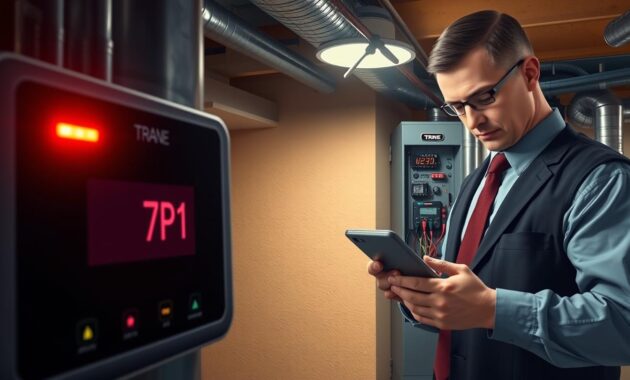
Imagine feeling helpless as strange signals flash on your furnace panel. The 7P1 code and red lights seem like a silent warning of system failure. Most homeowners worry about expensive repairs when they see these codes.
I’m here to help you understand these error messages. Knowing how your furnace communicates can help you fix problems fast. This guide will cover the most common error codes, empowering you to face heating system issues confidently.
Read also: Goodman Furnace Error Codes: Complete List
Understanding Your Trane Furnace’s Communication System
Modern Trane furnaces have changed how we see our heating systems. No more mysterious breakdowns or confusing malfunctions. Now, your furnace talks to you through flashing lights, giving you important info at a glance.
These advanced systems use blinking red lights to show you problems. The control board, hidden behind a panel, has LED lights that tell you a lot about your furnace’s state.
Decoding the Light Signals
Your Trane furnace’s lights send coded messages. Different blinking patterns mean different problems:
- Single blinks show minor issues
- Multiple blinks mean more serious problems
- Color changes (red, orange, green) add more info
How Diagnostic Lights Help Homeowners
These built-in tools let you know your furnace’s health before calling a pro. By watching the flashing lights, you can:
- Spot system problems fast
- Know if you need to act right away
- Give HVAC techs exact info
Knowing these light patterns saves you time, money, and avoids heating system troubles. Your Trane furnace does more than just heat your home. It also shares its status through these smart indicators.
What Is the 7P1 Error Code on My Trane Furnace?
Seeing the 7P1 error code on your Trane furnace means you need to act fast. This code usually means there’s a problem with the pressure in your furnace. Knowing what it means can help you talk better with HVAC experts.
The 7P1 error code often points to issues with the furnace’s pressure switch system. This system is key for safe operation, checking airflow and venting. If it fails, the 7P1 error code kicks in to avoid dangers.
- Potential causes of the 7P1 error code include:
- Blocked exhaust or intake vents
- Damaged pressure switch
- Faulty inducer motor
- Disconnected pressure switch tubing
When fixing this error, experts usually check a few important things:
| Component | Inspection Point |
|---|---|
| Exhaust Vents | Check for blockages or obstructions |
| Pressure Switch | Verify electrical connections and physical condition |
| Inducer Motor | Listen for unusual noises or improper operation |
While you might want to try fixing the 7P1 error code yourself, it’s best to call a pro. HVAC technicians have the right tools and know-how to fix it safely and right.
Decoding Blinking Red Lights on Your Furnace
When your furnace shows a blinking red light, it’s not just a random signal. These lights are your heating system’s way of telling you about possible problems. Knowing what a blinking red light on your furnace means can save you time and avoid unnecessary service calls.
Modern furnaces use LED diagnostic lights as a built-in communication system. Each blink pattern tells a unique story about your system’s health. Homeowners can learn to interpret these signals with a bit of patience and observation.
Interpreting Blink Patterns
Furnace blinking orange light or red light follows specific diagnostic codes. Here’s what to watch for:
- Single blink: Often indicates normal standby operation
- Multiple blinks: Typically signals a specific fault or error condition
- Consistent pattern: Repeats every few seconds
Color Codes and Their Meanings
| Light Color | Potential Meaning | Recommended Action |
|---|---|---|
| Solid Red | Critical System Fault | Immediate professional inspection |
| Blinking Red | Specific Error Code Active | Count blinks, check manual |
| Orange | Warning or Minor Issue | Monitor system, possible service needed |
Pro tip: Always count the number of blinks in a sequence. Most furnace manuals provide a code chart that matches blink patterns to specific problems. If you’re unsure, it’s best to consult a professional HVAC technician who can accurately diagnose and resolve the issue.
Common Trane Furnace Error Codes and What They Mean
Understanding trane gas furnace error codes can save you time and stress. Trane uses a specific system for error codes. This helps homeowners and technicians quickly find problems with heating systems.
Trane heating system diagnostic codes give important info about your furnace’s performance. Let’s look at some common error codes you might see:
| Error Code | Meaning | Potential Cause |
|---|---|---|
| CL2.020.00 | Recycle Error | Burners ignite but flame drops out quickly |
| CL2.020.01 | Retry Error | Flame sensor fails to detect flame during ignition |
| CL2.022.00 | Recycle Lockout | 10 consecutive recycle attempts in a single heating cycle |
| CL2.022.01 | Retry Lockout | 3 unsuccessful ignition attempts |
When you see these trane gas furnace error codes, it’s key to understand what they mean:
- Recycle errors often indicate fuel supply or ignition problems
- Retry errors suggest issues with the flame sensor
- Lockout conditions require professional intervention
Some error codes point to electrical or mechanical issues that might need immediate attention. If you’re seeing repeated error codes, it’s best to call a professional HVAC technician who specializes in Trane heating systems.
Read also: Whirlpool Stove Error Codes
Pressure Switch Errors: PS1, PS2, and PS3 Open or Closed
Pressure switches are key safety parts in Trane furnaces. They watch airflow and stop dangers. These small devices make sure your heating system is safe by checking the draft inducer motor before starting the burners.
Working on Trane furnaces, I’ve found pressure switch errors can be tricky. Different models might have one, two, or three pressure switches, based on their efficiency.
Common Pressure Switch Error Codes
When looking at trane furnace error codes, you’ll see specific ones for pressure switch issues:
- PS1 Open (CL2.001.04)
- PS1 Closed (CL2.001.05)
- PS2 Open (CL2.001.02)
- PS2 Closed (CL2.001.03)
- PS3 Open (CL2.001.00)
- PS3 Closed (CL2.001.01)
Why Pressure Switches Fail
Pressure switches can fail for many reasons:
- Disconnected or clogged tubing
- Blocked vent pipes
- Mechanical switch malfunction
- Condensate backup in heat exchanger
- Improper draft inducer motor operation
Troubleshooting Stuck Pressure Switch Contacts
When fixing pressure switch problems, I suggest checking the rubber tubing and vent pipe obstructions. Also, listen to the inducer motor. Most issues need a pro because they’re very important for safety.
| Error Code | Switch Status | Potential Cause |
|---|---|---|
| PS1 Open | First stage switch not closed | Tubing blockage or weak inducer motor |
| PS3 Closed | Third stage switch incorrectly engaged | Wiring issue or switch malfunction |
Flame Sensor and Ignition Problems
When you’re dealing with trane furnace error codes, flame sensor and ignition issues are common. Knowing about these problems helps you figure out heating system malfunctions. It also tells you when you need a pro.
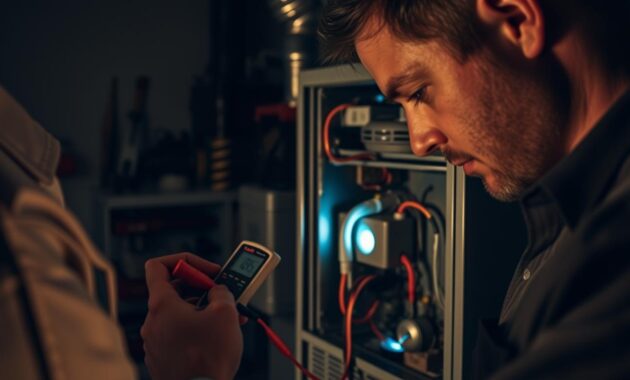
Flame sensors are key to your furnace’s safety. They check if there’s a flame when gas is released. If your trane furnace shows sensor problems, look out for these signs:
- Weak flame current signals
- Inconsistent burner performance
- Frequent system shutdowns
- Unusual flame coloration
Flame sensor troubles usually come from three main reasons:
- Carbon or oxidation buildup
- Improper sensor positioning
- Electrical connection problems
It’s a good idea to check your flame sensor’s condition often. For most people, cleaning it with fine-grit sandpaper can fix small issues. Make sure the furnace is off before you start any maintenance.
| Error Code | Potential Cause | Recommended Action |
|---|---|---|
| CL2.004.00 | Low Flame Sense | Clean flame sensor |
| CL2.010.00 | Ignitor Circuit Problem | Check ignitor resistance |
| CL2.010.01 | Control Board Failure | Professional inspection |
Looking at the flame can give you more clues. A good flame is blue and steady. Yellow or odd flames mean you might have combustion issues that need a pro.
High and Low Limit Switch Errors
Limit switches are key safety devices in Trane furnaces. They stop overheating and prevent fires. If your Trane furnace shows error codes like trane xl80 or trane xr80, it’s important to know what’s wrong.
These switches watch over your furnace’s temperature. They turn off the furnace if it gets too hot. There are different types, each guarding a part of your heating system.
Understanding Auxiliary Limit Switches
Auxiliary limit switches add extra safety to your furnace. They watch over certain areas and can spot overheating early. Usually found near important parts, they help protect your heating system from damage.
- Monitors specific temperature zones
- Provides backup protection
- Prevents possible heat-related damage
What Causes Limit Switches to Open
Many things can make a limit switch open in your Trane furnace. Common reasons include:
- Dirty air filters blocking airflow
- Blocked return or supply vents
- Broken blower motors
- Blocked evaporator coils
- Too small ductwork
When these switches turn on, it means your furnace isn’t safe. You can check and change air filters yourself. But, most limit switch problems need a pro to fix. Don’t ignore these warnings – they could save your heating system from big damage.
Temperature Sensor Faults in Trane Heating Systems
Diagnosing Trane xv80 error codes related to temperature sensors can be challenging. Modern Trane heating systems use advanced sensors for precise temperature control. This ensures the system works at its best.
Temperature sensors are key to your furnace’s efficiency. They are usually thermistors, which change their electrical resistance with temperature changes. The control board checks these sensors by sending a voltage and measuring the response.
- Ambient Temperature Sensors: Measure room or outdoor air temperature
- Coil Temperature Sensors: Monitor heat exchanger performance
- Liquid Line Sensors: Track refrigerant temperatures in heat pump systems
- Thermostat Internal Sensors: Detect indoor climate conditions
Common trane thermostat error codes related to temperature sensors include:
- CL2.027.00: Comfort control internal temperature sensor failure
- CL2.052.00: Indoor coil air sensor circuit open
- CL2.067.00: Ambient temperature sensor fault
- CL2.067.01: Coil temperature sensor malfunction
These sensor errors can show up as open circuits (infinite resistance) or short circuits (zero resistance). Some problems might need a pro to fix, but others could be fixed by just tightening a loose plug.
Experts use special multimeters to check sensor resistance. They compare these values to temperature charts from the manufacturer. Sometimes, replacing a sensor is needed to get your Trane system running right again.
Trane Furnace Error Codes Related to Communication Failures
Modern Trane heating systems use advanced communication networks. These networks let different parts talk to each other smoothly. But, when these networks fail, your furnace might show error codes.
These errors often happen when parts of the system can’t talk to each other. They might be caused by bad wiring, faulty sensors, or problems with the control board.
Common Communication Error Codes
Here are some key error codes Trane furnace owners should know:
- CL2.089.00: Configuration fault showing missing equipment
- CL2.090.00: Blower motor communication CRC error
- CL2.090.01: Inducer motor communication CRC error
- CL2.091.02: System communication error with possible data line issues
Diagnostic Insights for Communication Errors
| Error Code | Potential Cause | Recommended Action |
|---|---|---|
| CL2.089.00 | Equipment not discovered | Verify 12vDC between communication terminals |
| CL2.090.02 | Excessive communication errors | Check wiring connections |
| CL2.091.01 | Loss of inducer motor communication | Inspect communication board LED indicators |
While some error codes can be tricky, many communication problems are simple. Just check the wiring and make sure the voltage is right between communication terminals.
Voltage and Electrical Issues Triggering Error Codes
Electrical problems can cause frustrating trane gas furnace error codes. These codes might seem mysterious to homeowners. It’s important to understand these issues to keep your Trane heating system working well and safely.
Trane furnace error codes related to electrical problems fall into several key categories:
- Polarity errors
- Voltage fluctuations
- Grounding issues
- Power supply complications
Polarity errors happen when hot and neutral wires are reversed. This can stop your furnace from working right and might harm sensitive parts. Modern Trane furnace systems need exact electrical input to work safely.
Voltage problems can show up in two main ways: low voltage and high voltage. Low voltage might come from:
- Undersized electrical wiring
- Loose electrical connections
- Failing circuit breakers
- Utility supply inconsistencies
Grounding errors are another big electrical issue. Good grounding stops shock hazards and keeps electronics working right. If your Trane gas furnace finds grounding problems, it will show specific error codes to warn you of electrical risks.
While some might want to check these electrical issues themselves, I advise against it. It’s best to get a qualified HVAC technician or electrician to do the job. They can avoid damage and make sure your furnace runs safely and efficiently.
How to Safely Troubleshoot Your Trane Furnace Before Calling a Professional
Fixing your Trane furnace doesn’t always mean calling an expensive service. With some basic knowledge and careful checks, you can find and fix simple problems. I’ll show you some safe steps to identify and solve minor issues.
When working with heating systems, safety is key. Before you start troubleshooting, remember these important rules:
- Always turn off power to the furnace at the circuit breaker
- Never attempt repairs involving gas lines or electrical components
- Call a professional if you feel uncertain about any step
Checking Your Thermostat Settings
Many furnace problems come from simple thermostat mistakes. Here’s what to check:
- Verify the thermostat is switched to “heat” mode
- Set temperature at least 5 degrees above room temperature
- Replace batteries if your thermostat is battery-powered
- Confirm all vents throughout your home are open
Inspecting and Replacing Furnace Filters
Dirty filters can cause big problems in Trane and American Standard furnaces. Find your filter near the blower compartment:
- Horizontal furnaces: filter in side rack
- Vertical furnaces: filter in top or bottom door
- Inspect filter for dust and debris
- Replace disposable filters or clean permanent filters thoroughly
- Never operate the furnace without a filter installed
Locating the Inspection Port on Your Furnace
Knowing where your furnace’s inspection port is helps diagnose problems. Port locations differ by model:
- Furnaces with upper and lower covers: inspection port on lower cover
- Single-piece front cover furnaces: remove front cover to access secondary lower compartment
- Check for LED diagnostic lights that indicate specific error conditions
If these basic steps don’t fix your issue, it’s time to call a professional HVAC technician.
Conclusion
Understanding your Trane furnace’s error codes is key to peace of mind. Some issues, like dirty filters, you can fix yourself. But, many error codes mean bigger problems that need a pro.
Learning to read these codes helps you talk better with HVAC techs. This can avoid extra service calls.
This guide has shown you how to understand error codes. It covers everything from pressure switch issues to communication problems. The tips here work for Trane, Goodman, and Amana systems too.
Knowing what your system is saying can save you time and money. It also helps avoid damage to your heating system.
Regular maintenance is your best defense against sudden breakdowns. Stay ahead by being proactive and informed. Bookmark this guide for later and always put safety first.
If you smell gas, hear odd noises, or are unsure about anything, call a pro. Being an informed homeowner means making smart choices about your heating system. Stay curious, stay safe, and keep your furnace in top shape.